On Saturday we went to the
Fowler Museum on the UCLA Campus to check out the
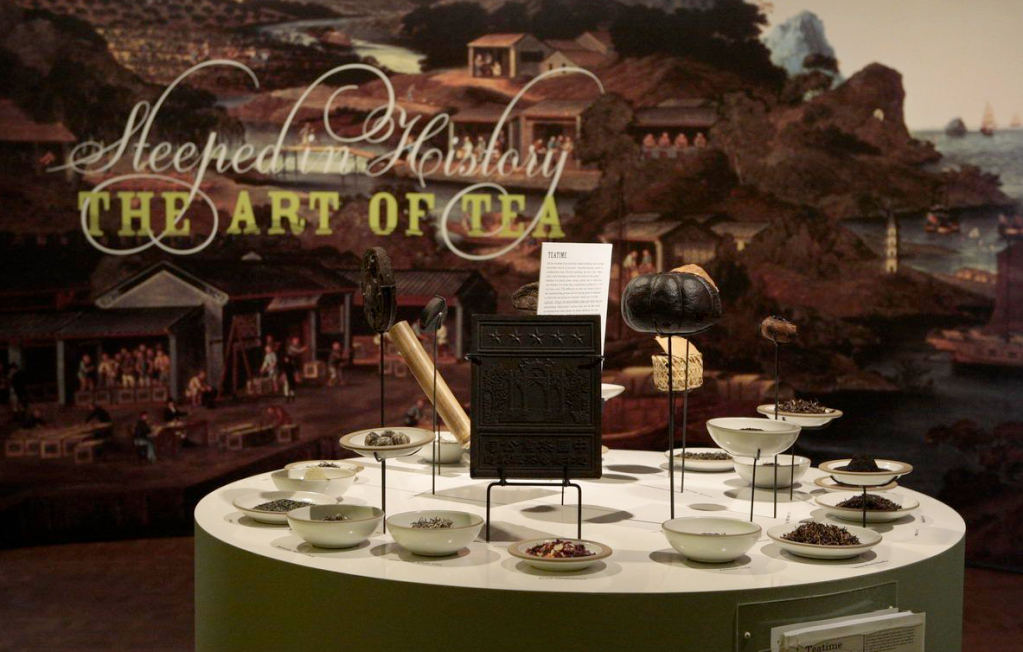
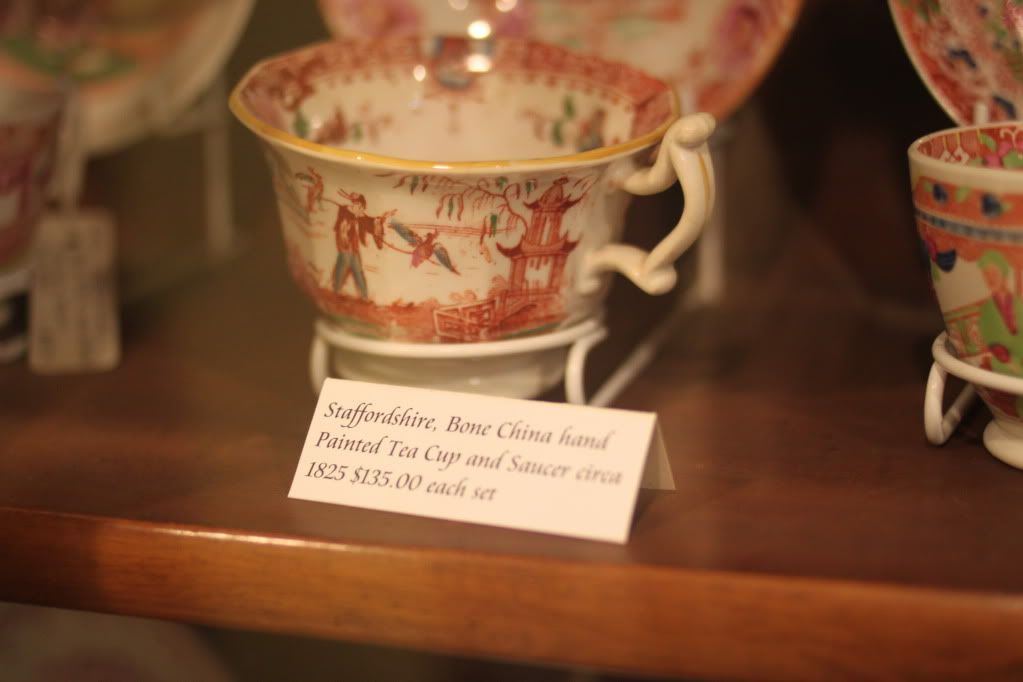
Steeped in History: The Art of Tea exhibition. The exhibition ends on November 29, so you have to get moving if you want to see it and you really should. And it's free!
The Fowler Museum explores global arts and cultures with an emphasis on works from Africa, Asia, the Pacific, and the Americas, past and present.
I think that the Fowler is the most underrated museum in Los Angeles. I've only been there a couple of times myself, and to be honest, I had never heard of it until a few years ago when I was doing research for my dissertation. I had never even set foot into the space until my visiting friend Nellie requested a trip to take a look at a couple of items in their collection that she was writing about in her dissertation about Congo ivory sculptures. But now it's my favorite museum in the city.
Why do I like it so much? It creates the most fascinating, well-researched, and comprehensive exhibits that I've ever seen. And what's more, they provide such a rich contextual background for the displayed objects and offer a distinctly multidisciplinary approach in their interpretation. It's like a glorious mash-up of an art and history museum, with a heavy dollop of ethnology.
Stepped in History brings together art from three continents and many centuries, including rare Chinese ceramics and paintings, 18th- and 19th-century Japanese ceramics and prints, extraordinary English and Colonial American paintings, historic photographs and documents, tea-serving paraphernalia and furniture from many countries, and much more—to tell the fascinating story of tea.
The opening begins with a display of fragrant teas from around the world.
The first section focuses on China, the birthplace of tea. Origin stories are discussed, like Bodhidharma, who accidentally fell asleep after meditating for nine years and cut off his eyelids, disgusted by his weakness. They fell to the ground and took root, growing into tea bushes. Think of that next time you're sipping on a chai latte. At any rate, people in China have been drinking tea for thousands of years.
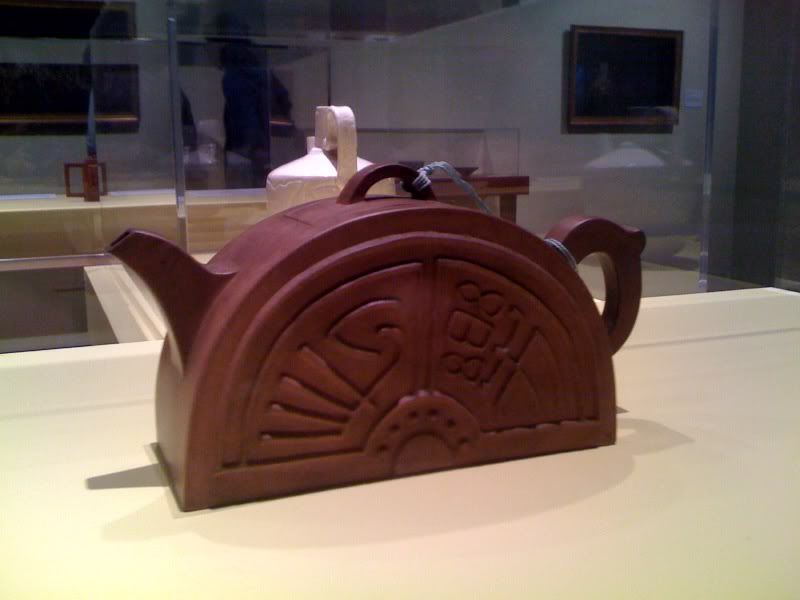
These YiXing loose leaf teapots were unglazed and simply rinsed with water to clean. The gradual buildup of sediment enhanced the flavor. Different teapots were used with different teas.
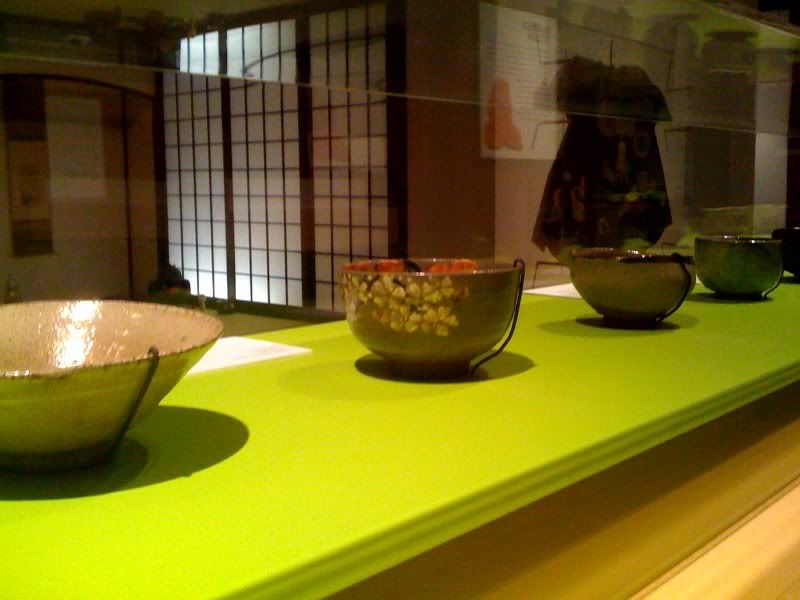
Shallow bowls were used in the summer while the taller thicker bowls were used during the winter for added insulation.
Interspersed between objects are featured poems and writings about tea.
Seven Bowls of TeaLu Tong
The first bowl moistens my lips and throat.
The second bowl banishes my loneliness and melancholy.
The third bowl penetrates my withered entrails, finding nothing except a literary core of five thousand scrolls.
The fourth bowl raises a light perspiration, casting life's inequities out through my pores.
The fifth bowl purifies my flesh and bones.
The sixth bowl makes me one with the immortal, feathered spirits.
The seventh bowl I ned not drink, feeling only a pure wind rushing beneath my wings.
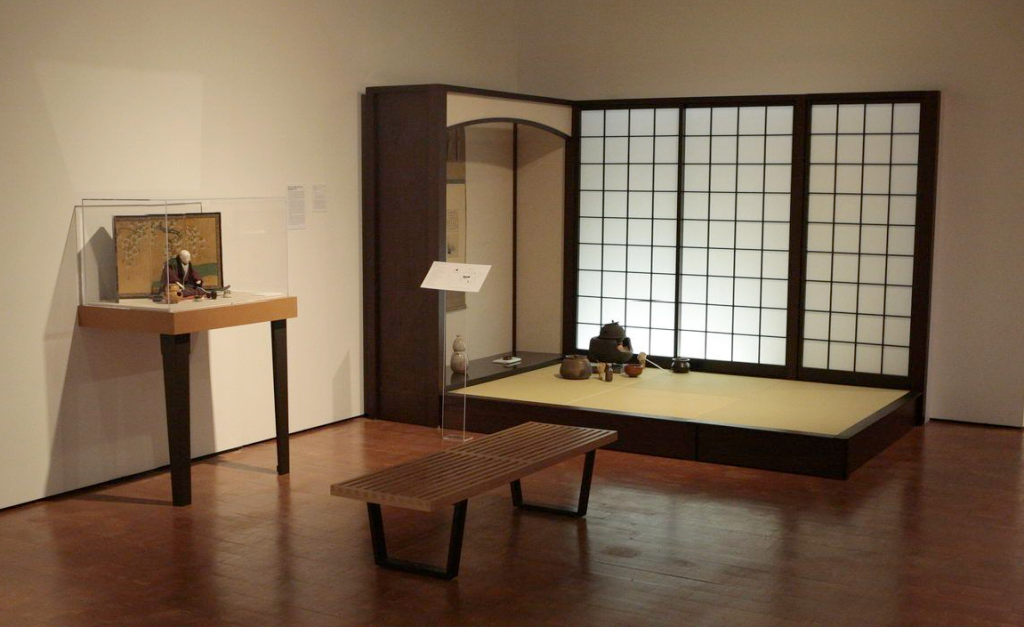
Moving on to Japan we learn that tea was first brought to Japan through priests and monks. They appreciated tea's ability to keep them alert during meditation.
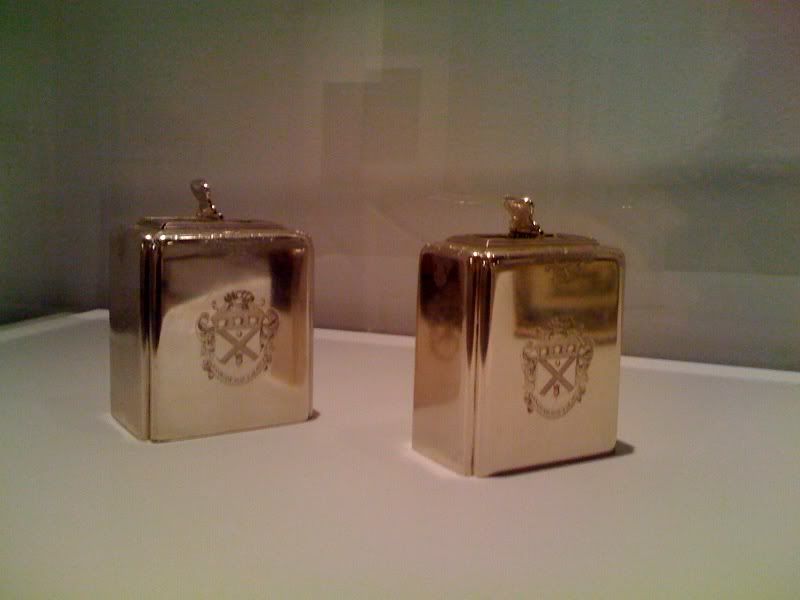
Tea caddies.
In the Japanese tea ceremony, five elements come together - fire (brazier), water (jar), earth, (tea bowl), wood (tea and the tea caddy), and metal (tea kettle).
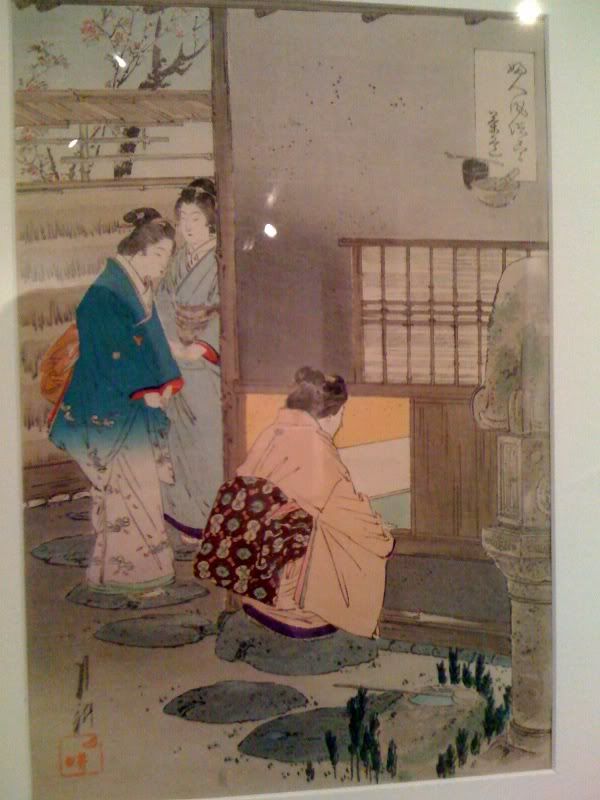
Woodcut of tea ceremony.
As ships sailed back and forth, trade opened and tea was introduced to other parts of the world. In the early 17th century in England it was all about coffee, tea, and chocolate.
Thomas Garway is said to be one of the first coffeehouse owners in London to begin selling tea. He provided a helpful account of its virtues in his advertisements in the mid 1660s:
- It maketh the body active and lusty.
- It is good against Crudites, strengthening the weakness of the Ventricle of Stomack, causing good Appetite and Digestion, and particularly for Men of a corpulent Body, and such as are great eaters of Flesh.
- It prevents and cures Agues, Surfets and Feavers, by infusing a fit quantity of the Leaf, thereby provoking a most gentle Vomit and breathing of the Pores.
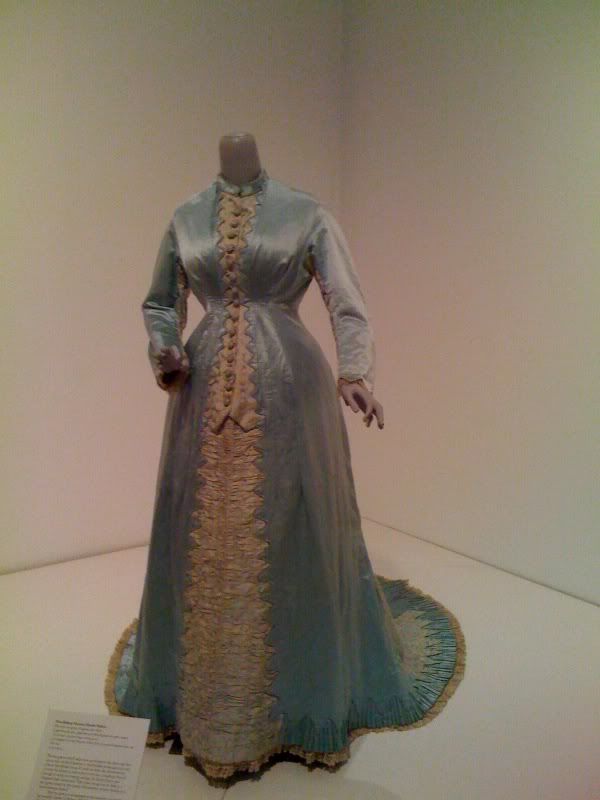
In addition to art and writing, the exhibition had examples of tea-inspired furniture and fashion. This silk satin tea gown could be worn for afternoon tea or dinner at home, but was not formal enough for evening outings.
Other examples of European tea luxury were in abundance.
But where did the British tea come from?
Well, they started by trading with China. But then China wanted actual cash for the tea, and the British was no way - what we have here is a trade imbalance! So they put on their thinking caps and were like, what could we trade with the Chinese so we could keep our cash? I know - Opium! With the Dutch introduction of the pipe expanded the use of opium as one addiction was traded for another. By the 1830s, 3 million Chinese were addicted. Crazy.
And just to muck around in other parts of the world, the British established tea plantations in India. In Darjeeling and Ceylon (Sri Lanka) plantations were created where the workers toiled in really crappy conditions. Social tension arose as workers of different economic and religious groups were forced to work together. By 1920 more than 1 million Indian laborers were producing tea for export and Chinese tea had virtually disappeared from the world market.
But if the British liked their tea, you know who liked it more? The colonists. Here's a fact I didn't know - the colonists were actually drinking more tea than England. They really liked the stuff. England forced them to only import it from them to eliminate foreign competition. When they added taxes to tea, the colonists went apeshit.

This was such a fascinating exhibit (I only touched on a small portion of it here). It reminded me of Mark Kurlansky's book
Salt: A World History. There's such a fervor nowadays to know where your food comes from. This exhibition gives you the full story behind tea.
Grass Roots: African Origins of an American Art was the other major exhibition on display. This was also really remarkable.
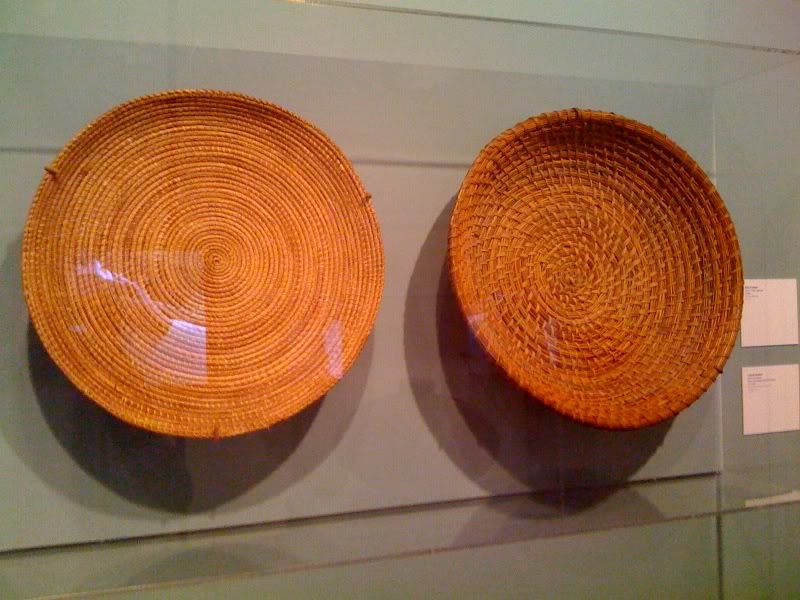
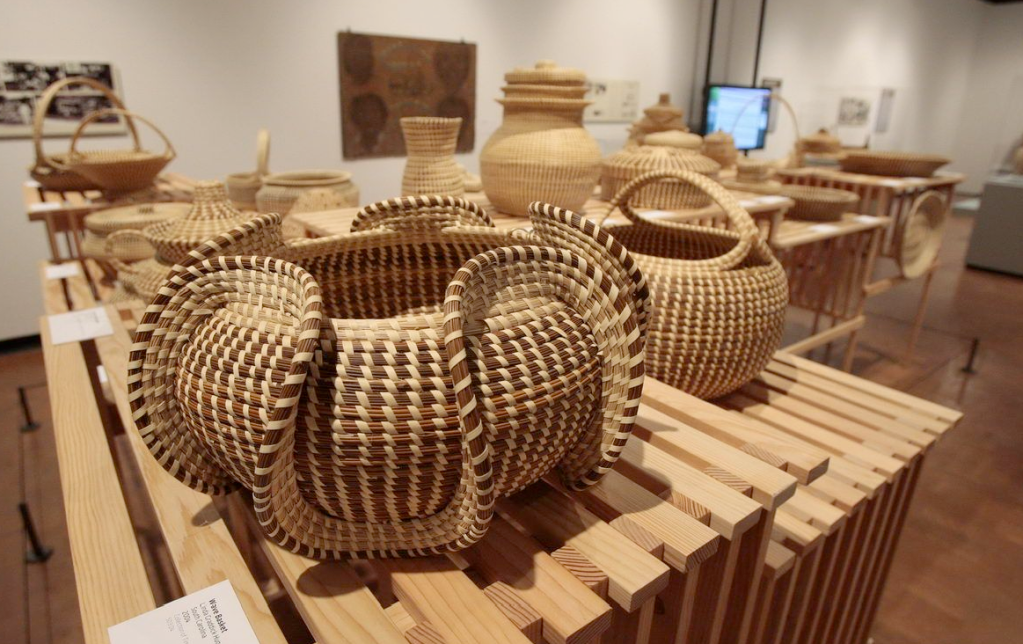
Grass Roots showcases the art and history of humble yet beautifully crafted coiled baskets in the American South and Africa. It explores the ways in which these utilitarian objects got gradually transformed into art and markers of cultural identity.
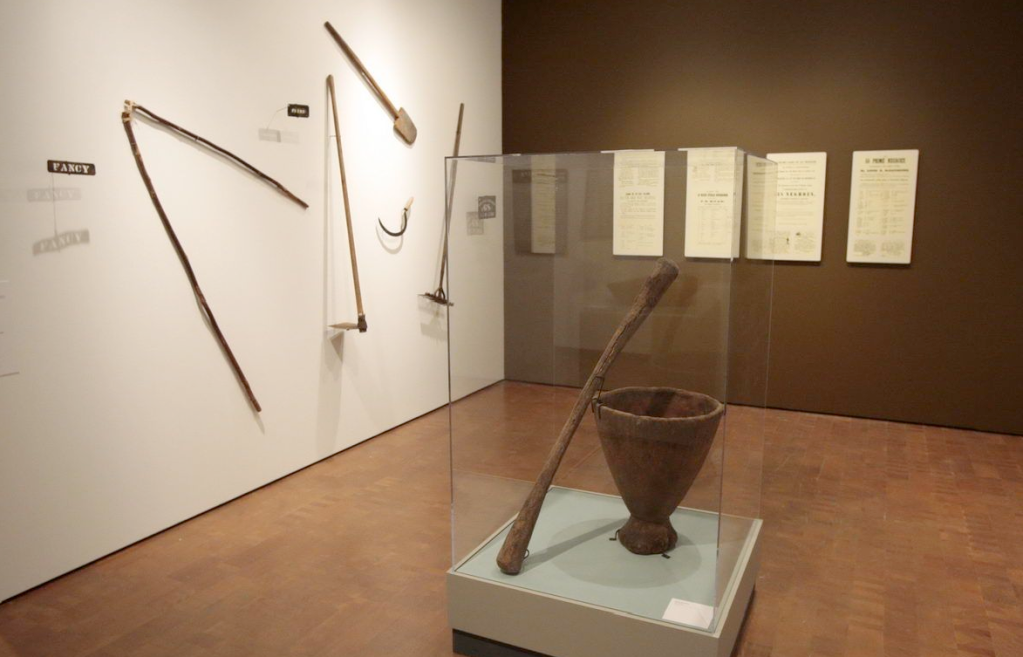
Borrowing from African traditions, baskets in America were initially used as a farm tool for processing rice on the plantations of South Carolina. Using a wide winnowing basket called a fanner, workers could separate rice grains from their husks by tossing them in the air.
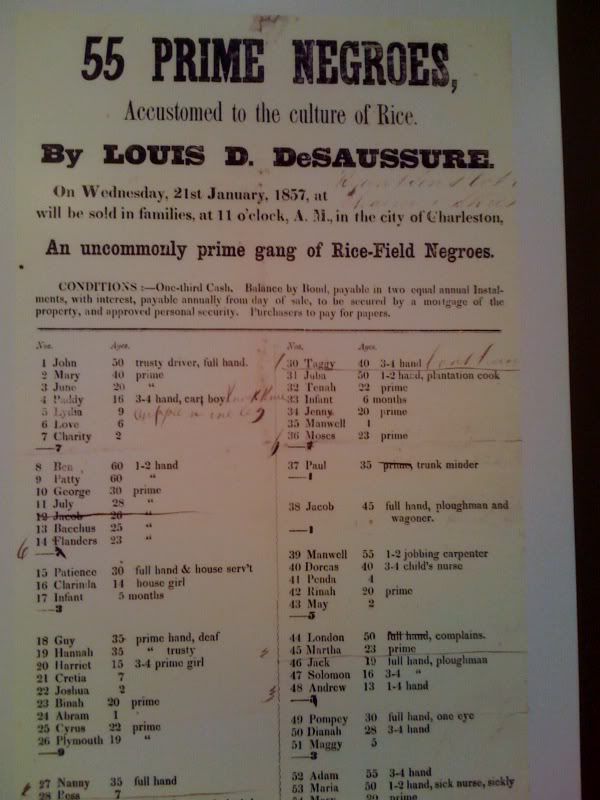
Slaves that had experience with rice were valuable.
I love how the exhibition showcased artists themselves. Videos showed artists crafting baskets, selecting grasses and materials, and teaching younger generations various techniques.
Rice features prominently in many West African ceremonies. Weddings, rites of passage, and funerals include gifts of rice. Antelope headdresses were worn by Bamana men in Mali during dances to call on the spirits for a successful rice harvest.
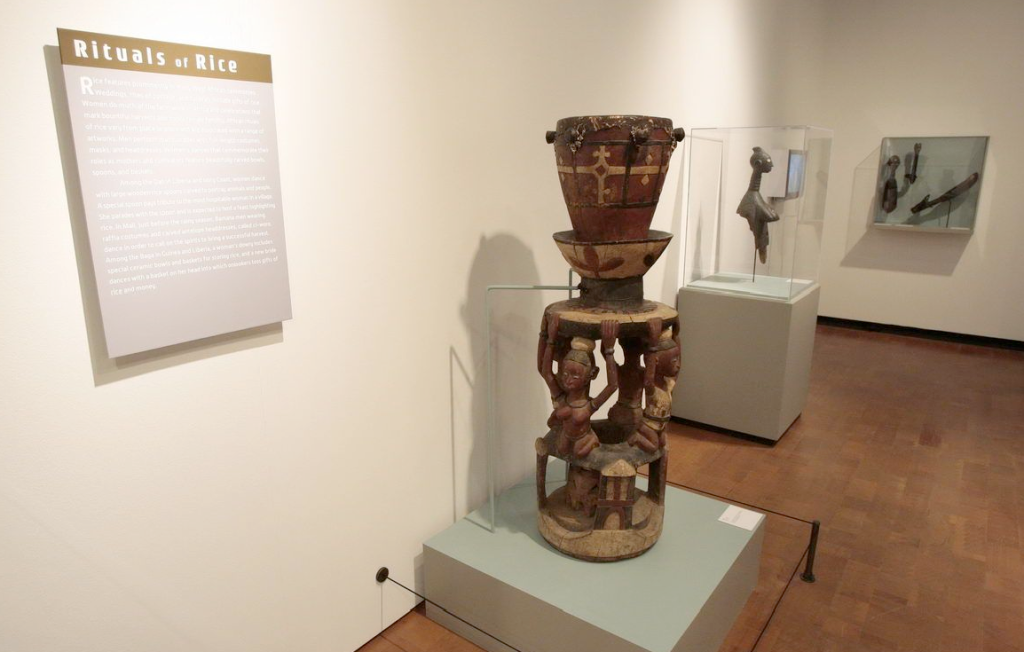
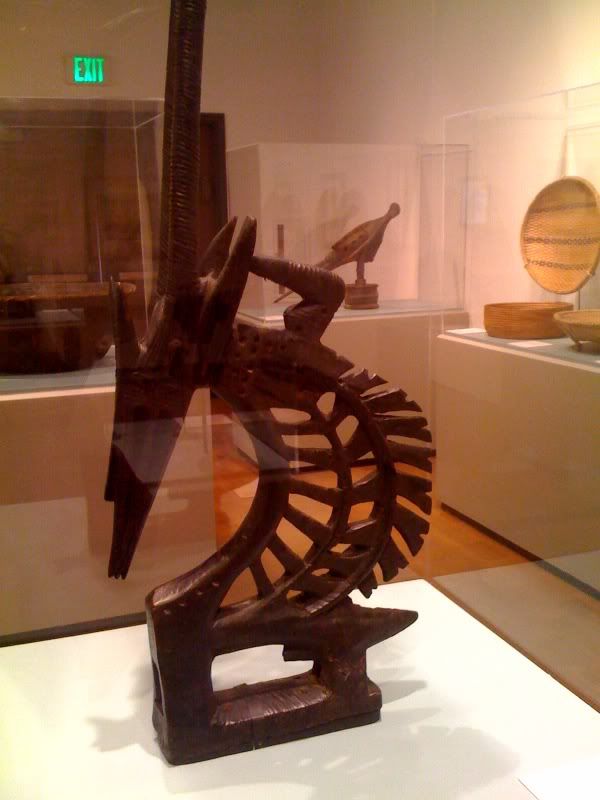
I also appreciate how the exhibition makes an effort to include contemporary artists.
Contemporary baskets are typically made of sweetgrass, bulrush, and palmetto leaf. With increased development, the natural habitat of the sweetgrass is fading and basket makers are forced to travel farther to find their materials.
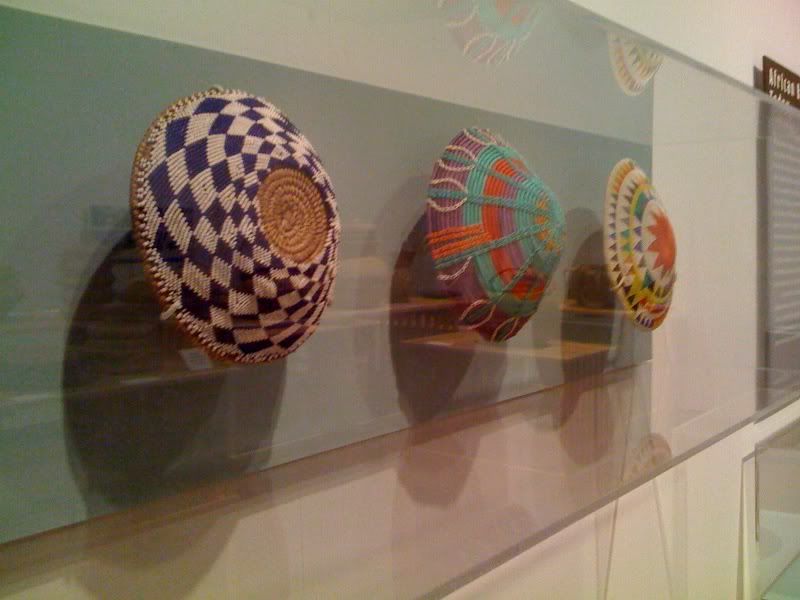
Since natural materials have become scarce in Africa, artists use materials like plastic coated telephone wire, synthetic threads from imported rice or flour bags, and castoff items from nearby factories. Traditional forms meet modern materials.
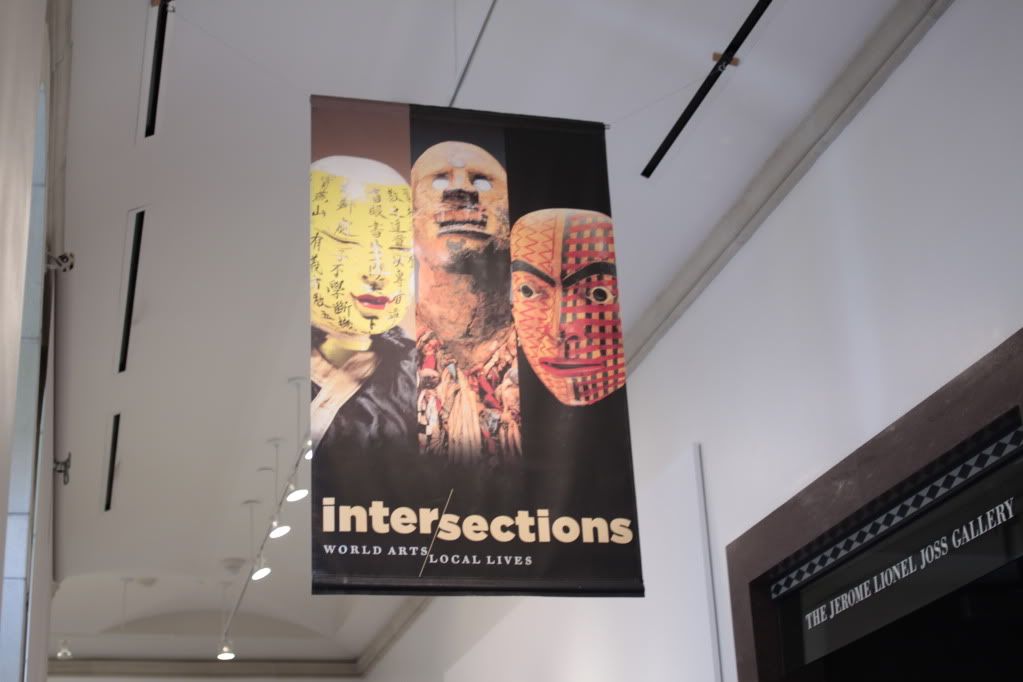
Intersections: World Arts, Local Lives is the permanent exhibition and it alone makes the Fowler worth a visit.
It organizes its collection of objects in several themes that encourage contemplation about how objects and art intersect with people's lives around the world.
For example, one theme explores the link between knowledge and the communication of history. Painted vessels from Peru document the lives of historic people who left no written records. Burmese marionettes serve as memory aids, designed to assist owners and audience members with the recollection of events, people, and sacred places.
Another theme of art as facilitator in transformation allows the museum to present objects such as funeral masks worn during morning in Gabon and New Ireland, power figures from the Democratic Republic of the Congo, Mexican devotional paintings.
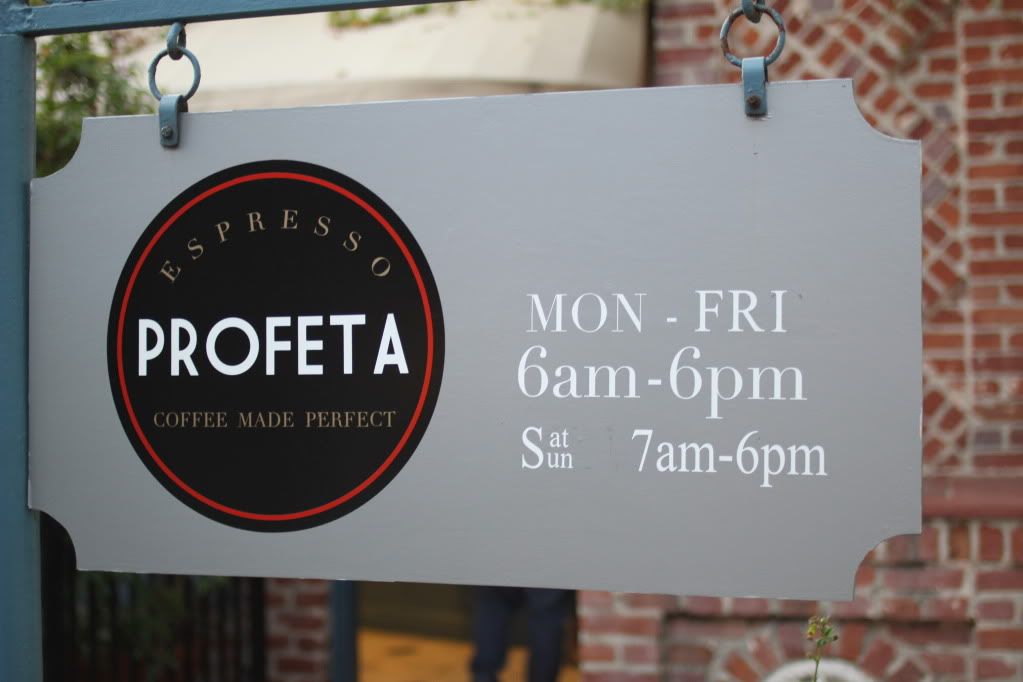
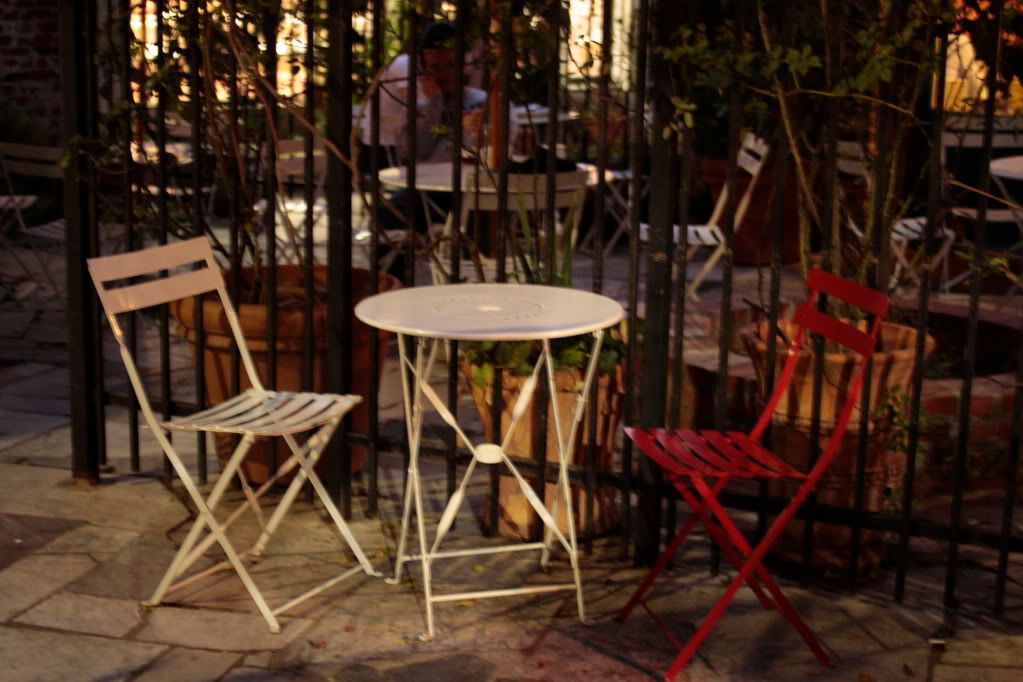
After Steeped in History, I took Mr. Insom to get some, what else, tea. I've passed by Espresso Profeta a couple of times and it looked like it had a nice patio, so we trudged in.
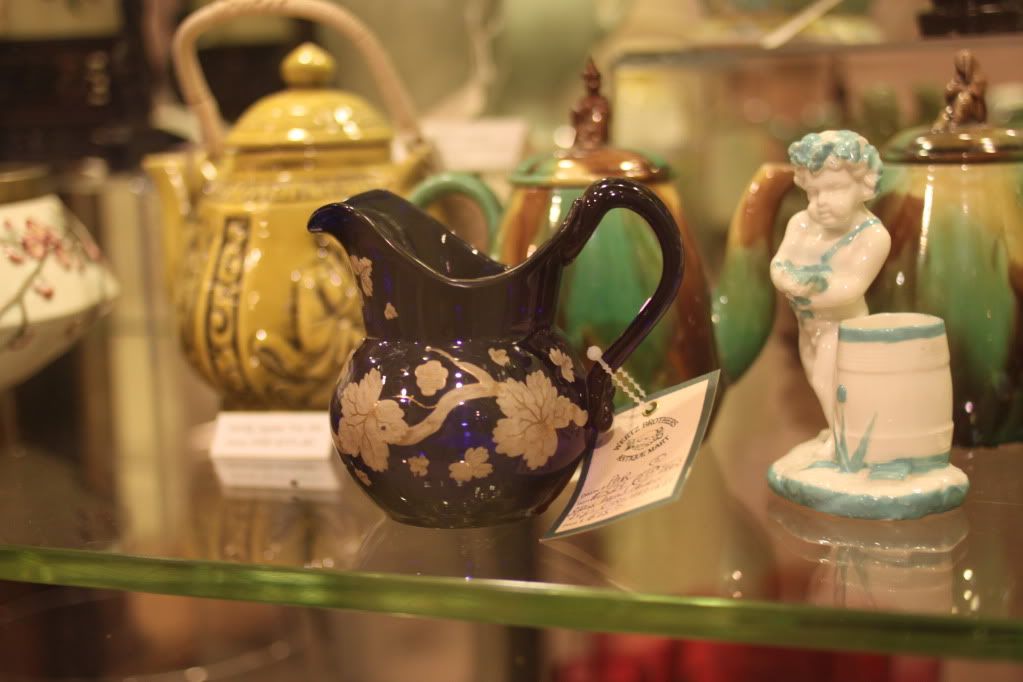
I thought it was cool how they had all these teapots on display and for purchase.

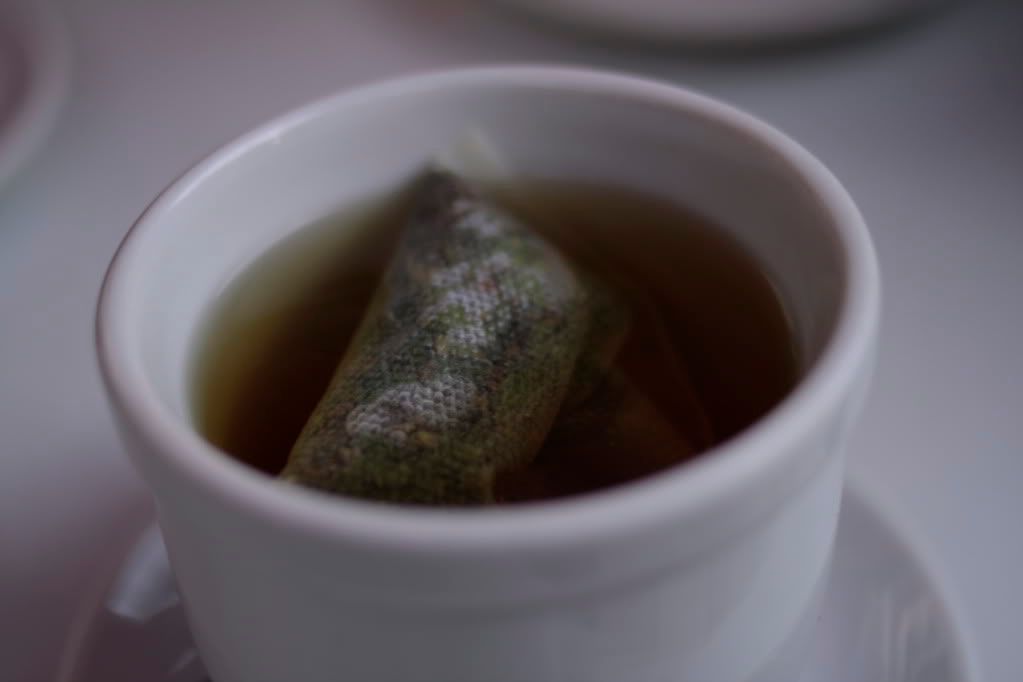
One green tea for me! Let's ponder about Bodhidharma's eyelids.
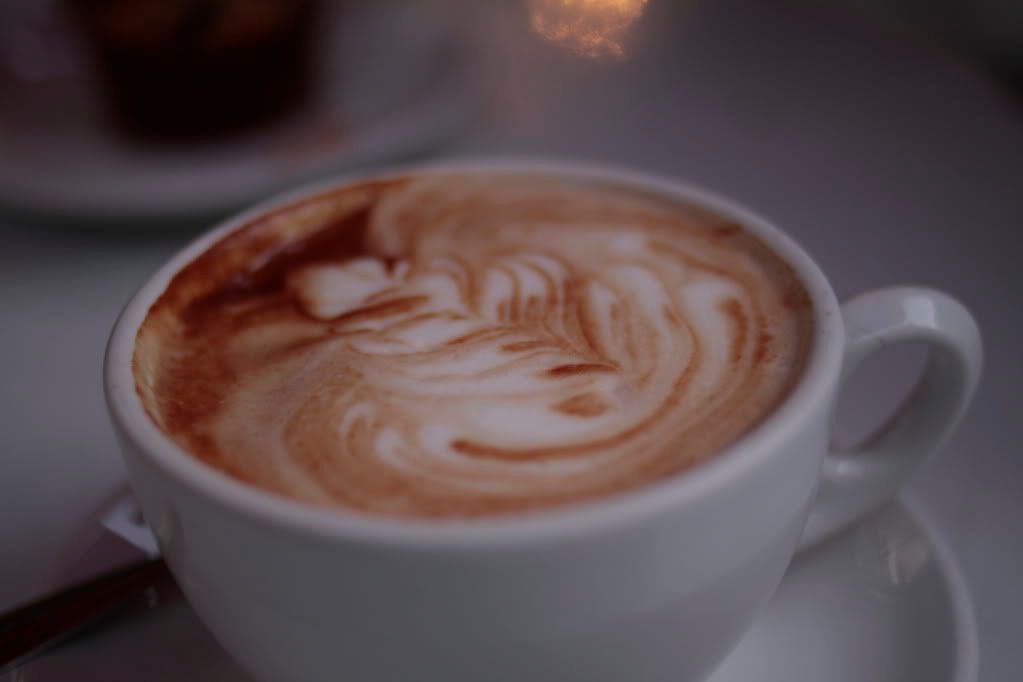
Mr. Insom brought the tea theme to a screeching halt when he ordered a soy cappuccino. He said it was the best he's had in a while, so I guess it was okay. I guess.
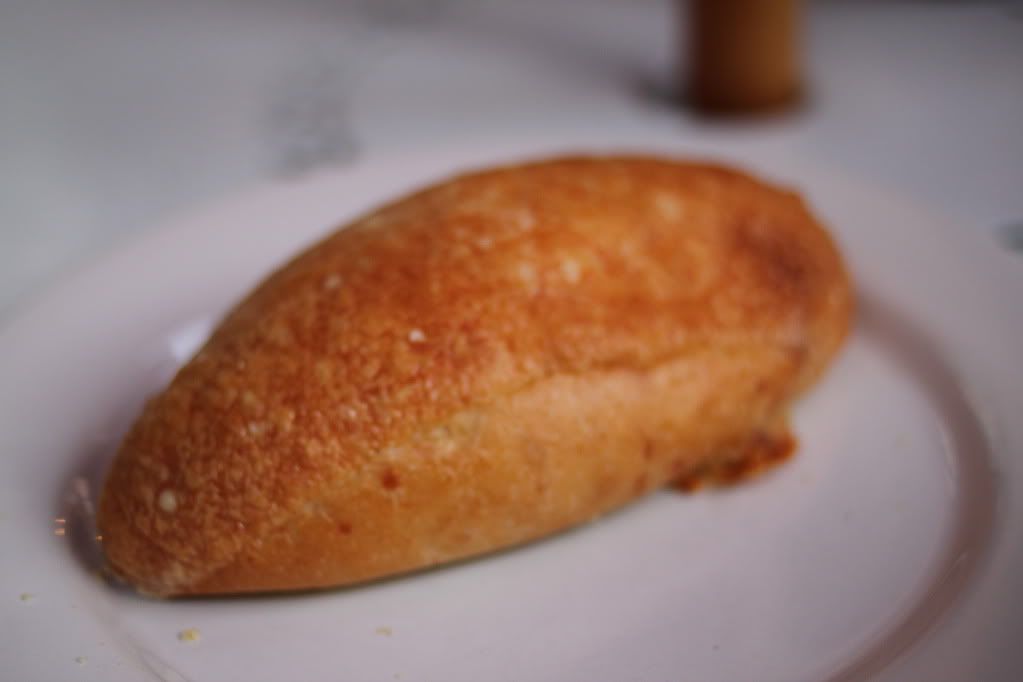
Disclaimer: When the guy at the counter saw me snap snapping away, he inquired if I we were tourists. Mr. Insom mumbled something about a blog, and then the guy gave us a free cheese bread thingee! It was freelicious. lol Granted, the place was about to close and they probably would have had to throw it out or something, but suh-weeet.
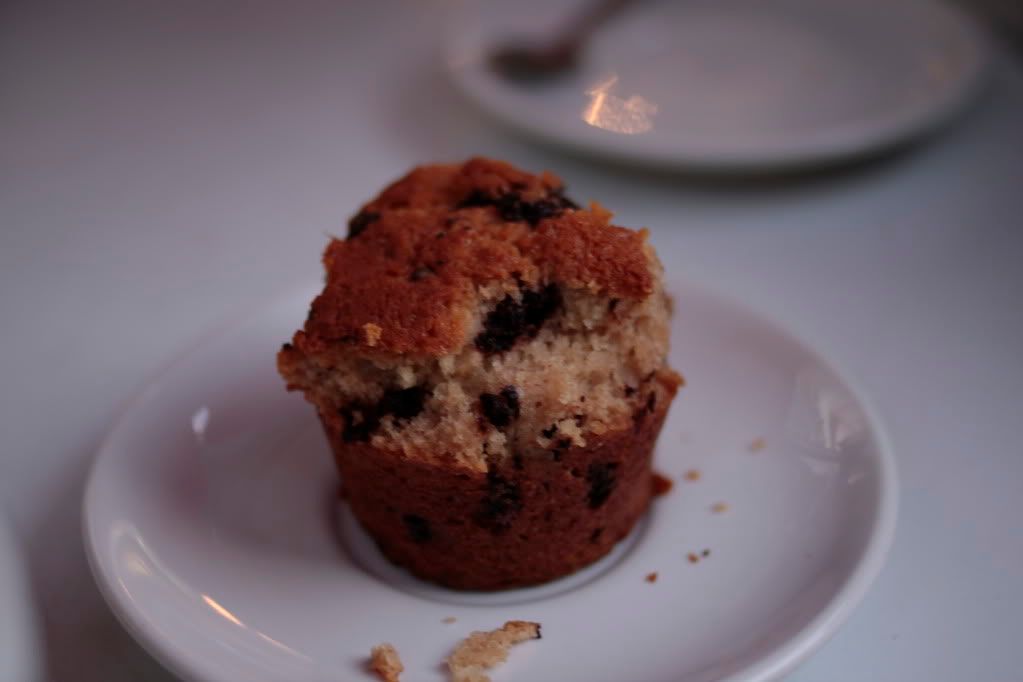
A nibbled muffin.
Good times.
Good tea.
Good exhibit.
Go to the Fowler. Did I mention that it's free?
Insomniac out.